
Vehicle Lifts for Fire Stations, Municipal Fleets & Public Works Facilities: A Preconstruction Guide
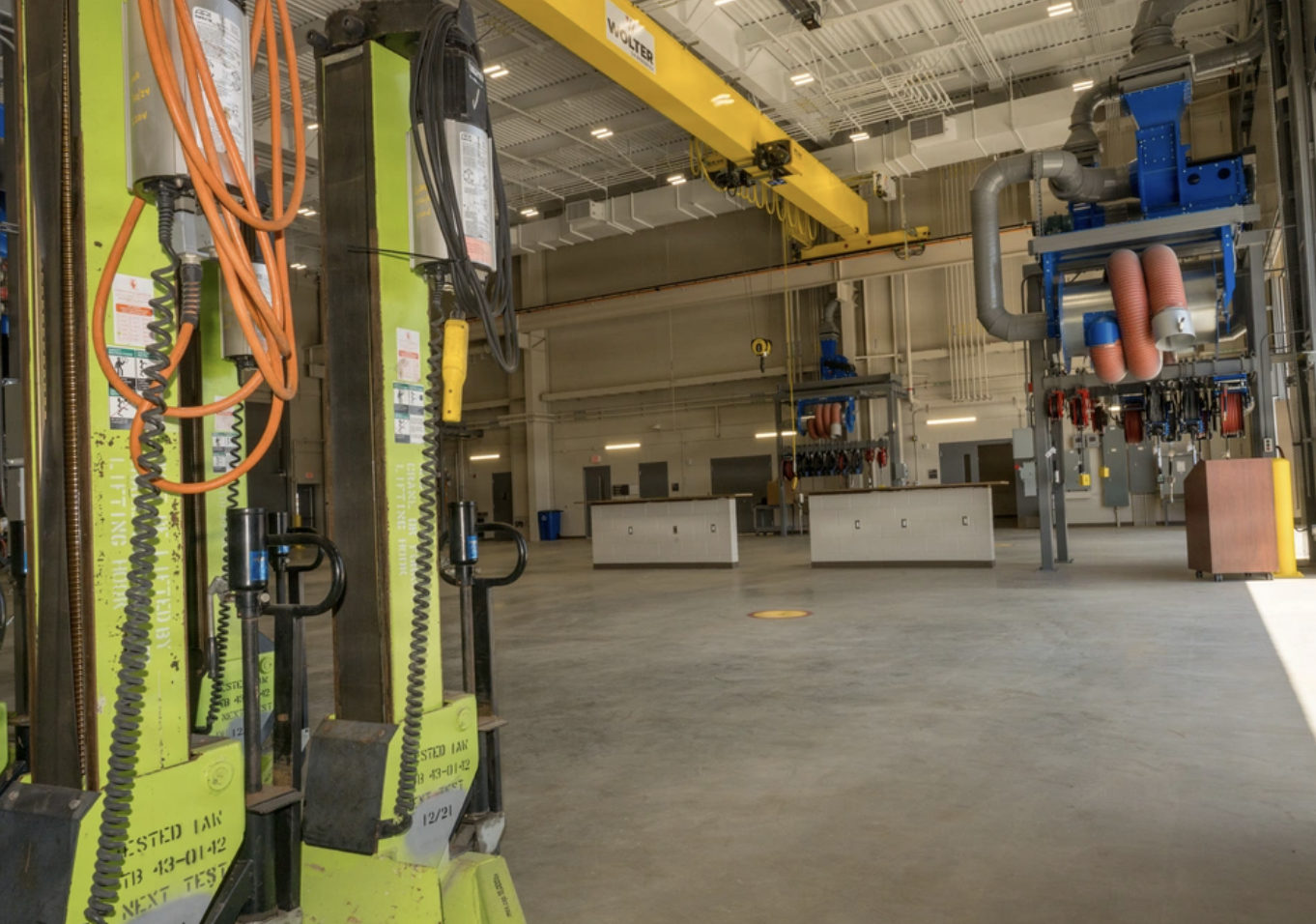
Vehicle lifts are critical equipment in fire stations, municipal fleet shops, public works facilities, transit operations and other government maintenance facilities.
They're also a specialized construction scope that can be easy to underestimate during design and preconstruction.
The lift package may represent only a small portion of a large public project, but the equipment can interact with concrete, foundations, underground infrastructure, electrical service, compressed air and other shop systems. Heavy-duty and in-ground lifts can require even more coordination.
For general contractors, architects, engineers, estimators and public-agency project teams, understanding the lift requirements early can prevent a relatively small equipment package from becoming a much larger construction problem.
Start With the Vehicles the Facility Actually Maintains
The first question shouldn't simply be:
“How many lifts does the building need?”
It should be:
“What vehicles does this facility need to lift?”
A municipal fleet may include everything from passenger vehicles and police cruisers to utility trucks and heavy public works equipment.
Fire stations may need to accommodate apparatus that is considerably larger and heavier than a typical commercial vehicle.
Transit facilities may service full-size buses and other specialized equipment.
Before selecting lifts, consider factors including:
Vehicle weight
Wheelbase
Overall vehicle length and height
Lifting points
Ground clearance
Vehicle configuration
Current fleet composition
Vehicles the agency expects to acquire in the future
A lift should support the facility's actual operating needs—not simply fit the available service bay.
Light-Duty and Heavy-Duty Lifts Are Very Different Projects
A two-post lift used for passenger vehicles is not the same construction scope as a heavy-duty lift used for buses or fire apparatus.
Depending on the application, a government fleet facility may use:
Two-post lifts
Four-post lifts
Scissor lifts
Mobile column lifts
Heavy-duty surface-mounted lifts
Heavy-duty in-ground lifts
Specialty lifting equipment
Each configuration can have different foundation, clearance, utility and installation requirements.
That's why identifying the actual equipment early is important.
A generic “vehicle lift” notation on a plan doesn't necessarily provide enough information for the contractors responsible for the surrounding infrastructure.
In-Ground Lifts Require Early Coordination
In-ground vehicle lifts deserve particular attention during new construction.
Unlike equipment that can simply be placed on a completed shop floor, in-ground systems can become part of the facility's underground construction.
Depending on the lift, installation may need to be coordinated with:
Excavation
Lift containment or equipment components
Concrete foundations
Reinforcement
Underground utilities
Hydraulic systems
Drainage
Electrical service
Compressed air
Finished floor elevations
By the time the building slab is complete, changing one of these conditions can become considerably more difficult.
For projects using in-ground lifts, the installer should be involved early enough for the lift requirements to be coordinated with the structural, civil and MEP scopes.
Concrete Is Part of the Equipment Installation
Vehicle lifts depend on the infrastructure supporting them.
The Automotive Lift Institute's ANSI/ALI ALIS installation and service standard identifies planning considerations including lift placement, concrete work, foundations, soil conditions and regulatory compliance.
The exact requirements depend on the lift and manufacturer.
For above-ground lifts, concrete strength, thickness, condition and anchorage may all matter.
Heavy-duty and in-ground systems can involve more substantial foundation requirements.
For California projects, applicable structural and seismic conditions may introduce additional considerations that should be evaluated by the project's qualified design professionals.
The important point for the project team is simple:
Don't wait until the lift arrives to determine whether the building was constructed to support it.
Coordinate Seismic Requirements During Design
California projects require another level of awareness because of seismic conditions.
The lift installer isn't the project's structural engineer and shouldn't independently perform engineering that belongs to a licensed design professional.
However, the project engineer needs the correct equipment information to evaluate applicable requirements.
That means the lift manufacturer, model, capacity, foundation requirements and anchorage information should be available early enough to be incorporated into the project's structural coordination.
An experienced vehicle lift installer can help identify equipment-specific requirements that need to be brought to the engineer's attention before installation.
Vehicle Lifts Are Only One Part of a Fleet Maintenance Facility
Public fleet facilities often contain much more specialized equipment than the lifts themselves.
Depending on the operation, a maintenance facility may also require systems for:
Compressed air
Lubricants
Engine oil
Waste oil
Coolant
Diesel exhaust fluid (DEF)
Fuel
Vacuum
Electrical power
Wash equipment
Other shop equipment
Many of these systems need to reach the same service bays occupied by the lifts.
That makes coordination especially important.
A lift may work perfectly in isolation but conflict with underground piping, floor drains, utilities or another piece of equipment once all of the facility systems are overlaid.
Think About Maintenance and Service Before the Facility Opens
The project doesn't end when the lift is installed.
Vehicle lifts are working equipment that will require inspection, preventative maintenance and eventually repair.
The current ANSI/ALI standard governing lift operation, inspection and maintenance calls for periodic inspection by a qualified lift inspector at least annually, along with planned and repair maintenance performed by qualified personnel.
Facility teams should therefore consider:
Access for future service
Availability of replacement parts
Manufacturer support
Service-provider availability
Maintenance documentation
Inspection requirements
Equipment downtime
Long-term lifecycle needs
For a public fleet, downtime can affect much more than one service bay. It can interfere with maintenance of vehicles that support public safety, transit and essential municipal operations.
Specify Certified Vehicle Lifts
Equipment selection matters too.
The Automotive Lift Institute maintains a certification program for vehicle lifts that have been independently tested to applicable ANSI/ALI safety requirements.
Project teams should verify that specified equipment meets the applicable code and certification requirements rather than assuming every commercially available lift does.
Manufacturer, equipment certification, intended use and long-term service support should all be part of the procurement decision.
Clearly Define the Lift Scope Before the Project Is Bid
Vehicle lift packages can cross several trades.
That creates an obvious opportunity for scope gaps.
Before bidding or construction, project documents should make clear who is responsible for items such as:
Lift procurement
Freight and delivery
Unloading
Equipment storage
Excavation
Foundations and concrete
Reinforcement
Anchoring
Electrical connections
Compressed air
Hydraulic components
Underground piping
Lift assembly and installation
Startup
Testing
Training
Inspection
Documentation
If nobody owns a portion of the scope, the problem often isn't discovered until somebody needs it in the field.
For general contractors and estimators, having an experienced lift installer review the package during bidding can help identify these gaps before the contract is underway.
Experience Matters on Government & Municipal Lift Projects
Government vehicle-maintenance facilities are not an unusual or occasional application for Red Rock Industrial's lift experience.
Greg Niles brings more than 20 years of hands-on experience installing vehicle lifts throughout California, with extensive experience in municipal, government and institutional facilities.
That experience includes lift systems supporting municipal fleets, transit and bus operations, fire and public-safety facilities, airport and rental-car operations and other specialized vehicle-maintenance environments.
Red Rock Industrial is also a certified Rotary installer and service provider.
Combined with our Class A general engineering and underground piping capabilities, that experience allows Red Rock Industrial to understand both the vehicle lift and the infrastructure surrounding it.
Planning or Bidding a Public Fleet Facility?
If you're a general contractor, estimator, engineer, municipality or facility team planning a project involving vehicle lifts, getting an experienced installer involved during preconstruction can help identify requirements before they become field problems.
Red Rock Industrial can review plans, equipment schedules and lift specifications to help define the installation scope and identify items requiring coordination with the project team.
Have an upcoming fire station, fleet facility, public works shop or government vehicle-maintenance project?
Send us the plans and lift specifications.
→ Learn more about Red Rock Industrial's Vehicle Lift Installation & Service.