
Do I Need a Fire Hydrant for My San Diego County Property or Construction Project?
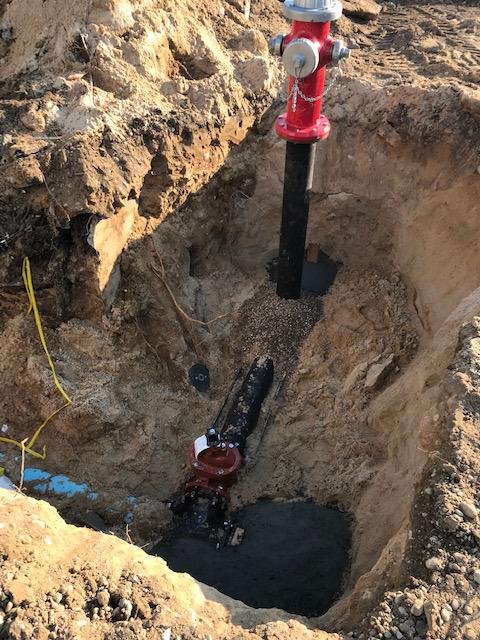
If you're building a new home, developing a property or planning a commercial project in San Diego County, fire-water requirements can become an important—and sometimes unexpected—part of the project.
One question property owners and developers frequently encounter is:
Will I need to install a fire hydrant?
The answer depends on the property's location, available water supply, required fire flow, distance from existing infrastructure and requirements established by the applicable fire authority.
In some cases, satisfying those requirements can involve much more than simply installing the hydrant itself. The project may require a waterline extension, underground fire service main, valves, backflow equipment, trenching and other supporting infrastructure.
Here's what property owners, builders and project teams should know.
Who Decides Whether a Fire Hydrant Is Required?
The applicable fire code official or fire authority determines the fire-protection requirements for a project.
Those requirements can depend on factors such as:
Property location
Type and size of construction
Building use
Available water supply
Required fire flow
Existing hydrant locations
Distance to an existing water main
Fire access
Fire sprinkler requirements
Applicable fire district and local code
That means there isn't a simple rule that every new building automatically needs its own hydrant—or that every property without a nearby hydrant can simply use an alternative water source.
The project's requirements need to be determined for the specific site.
The 1,500-Foot Water Main Rule in Unincorporated San Diego County
For projects within the areas governed by the applicable San Diego County Consolidated Fire Code, there is one particularly important requirement to know.
The 2026 County Fire Code states that the fire code official shall require a waterline extension for the purpose of installing a fire hydrant when a water main is 1,500 feet or less from the property line.
That's significant for rural and semi-rural development.
A property owner may assume that because the nearest water main isn't directly in front of the property, a private water tank or another solution will automatically be allowed.
That isn't necessarily the case.
The current County code provides an exception allowing water tanks only as determined by the fire code official when the applicable water district provides a letter stating that extending the waterline and installing a hydrant would not provide proper fire flow.
In other words, the distance to existing water infrastructure can materially affect the fire-protection scope of a project.
What Is Fire Flow?
Having a water line nearby doesn't automatically mean that line can provide adequate fire protection.
Fire flow refers to the rate of water supply available for firefighting purposes.
The required fire flow depends on the project and applicable fire-code requirements. The County's current code allows the fire official to establish required fire flow using applicable California Fire Code provisions or other approved standards.
This is why a project may need information about both:
Where the nearest water infrastructure is, and
Whether that infrastructure can actually provide the required flow.
Within the City of San Diego, for example, current private fire-service and hydrant permit requirements call for water-supply information and, where required, hydraulic calculations demonstrating that adequate fire flow is available.
What Is a Private Fire Hydrant?
Not every hydrant you see is part of the public municipal system.
A private fire hydrant can be located on private property and connected to a privately maintained underground fire-service system.
Private hydrants are common on larger developments and facilities where public hydrants alone don't provide the required coverage.
Depending on the project, a private fire-water system may include:
Underground fire-service piping
One or more fire hydrants
Valves and fittings
Backflow-prevention equipment
Fire department connections
Building fire-sprinkler service
Thrust restraints or blocks
Other fire-water infrastructure
The hydrant itself is therefore often only the visible endpoint of a much larger underground system.
Installing a Hydrant Can Mean Extending a Waterline
This is something worth understanding early in the development process.
If the project requires a hydrant and existing infrastructure isn't already at the required location, installation may involve substantial underground work.
Depending on the approved plans, that can include:
Trenching
Waterline or fire-main installation
Connections to existing infrastructure
Hydrant assemblies
Valves
Restraints and thrust blocks
Bedding and backfill
Backflow equipment
Pressure testing
Inspection and project closeout
For projects that extend into a public right-of-way, additional permitting and coordination may also be required.
The City of San Diego, for example, treats the portion of private underground fire service from the property line to the structure or hydrants differently from work extending into the public right-of-way. A separate right-of-way permit applies to the public-side work.
Do Fire Hydrant Installations Require Permits?
Generally, yes, when the project involves new private underground fire service or hydrant installation.
The exact process depends on the jurisdiction.
Within the City of San Diego, a permit is required for private underground fire-service mains and fire hydrants. Current submittal requirements can include project information, water-supply data, plans, fire-flow analysis, equipment data and hydraulic calculations when applicable.
The City also requires a Fire Underground Final inspection for these projects regardless of the length of the underground fire main or number of hydrants installed.
Projects elsewhere in San Diego County may be subject to requirements from the County, applicable fire-protection district, water district and other authorities having jurisdiction.
That's why the approved project plans—not assumptions from another property—should guide the installation.
Who Can Install Private Underground Fire Service and Hydrants?
The required contractor licensing depends on the project and jurisdiction.
For City of San Diego private underground fire-service and hydrant projects, current requirements identify several acceptable California contractor classifications, including Class A General Engineering Contractors.
Red Rock Industrial is a California Class A General Engineering Contractor specializing in underground piping and infrastructure.
That makes fire-water work a natural extension of our core experience.
Why It's Better to Address Fire-Water Requirements Early
Fire hydrants and underground fire service can affect other parts of a construction project.
Waiting until late in development to discover that a waterline needs to be extended—or that additional underground fire infrastructure is required—can affect:
Site design
Grading
Trenching
Utility coordination
Paving
Construction sequencing
Permitting
Project cost
Schedule
If fire-water requirements are identified early, the underground work can be coordinated with the rest of the project's civil and utility infrastructure.
For general contractors and developers, that can be much easier than reopening completed site work later.
Fire Hydrant & Underground Fire Service Installation in San Diego County
Red Rock Industrial installs fire hydrants, underground fire-service mains and associated fire-water infrastructure for projects throughout San Diego County.
With more than 20 years of underground piping experience and a California Class A General Engineering Contractor license, Red Rock Industrial can work from approved plans to complete the underground installation and coordinate the fire-water scope with the larger construction project.
Our work can include:
Fire hydrant installation
Underground fire-service mains
Waterline extensions
Fire-water piping
Valves and fittings
Trenching and excavation
Thrust restraint
Connections and associated underground infrastructure
New-construction fire-water systems
Does Your Project Require a Fire Hydrant?
If a fire authority, engineer, developer or project plan has identified a hydrant or underground fire-service requirement, Red Rock Industrial can review the installation scope.
Already have plans?
Send us the fire-water or civil plans and project information and we'll take a look at the underground scope.
→ Learn more about Red Rock Industrial's Fire Hydrant & Underground Fire Service Installation.