
Private Fire Hydrant Installation in San Diego: What GCs & Developers Need to Know
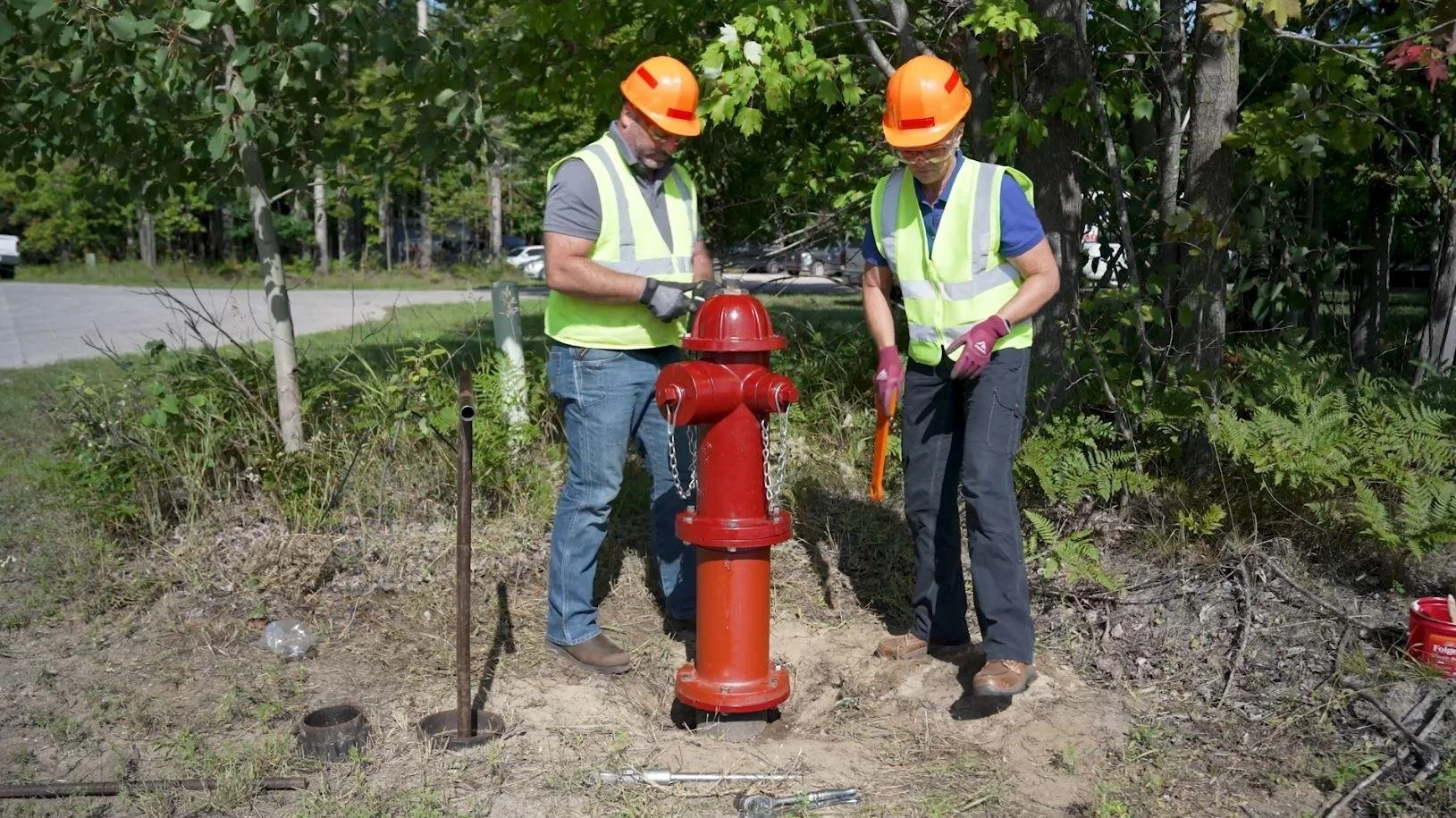
A fire hydrant may look like one relatively small component on a set of construction plans.
Underground, however, the scope can be considerably larger.
A private fire hydrant may be connected to an underground fire-service main involving piping, valves, fittings, restraints, backflow equipment, trenching, testing and other infrastructure.
Not sure whether your San Diego County property or construction project requires a fire hydrant? Read our guide to fire hydrant requirements in San Diego County.
Depending on the project, work may also need to coordinate with building fire-sprinkler systems, public water infrastructure and work within the public right-of-way.
For general contractors, developers and project teams, understanding that complete scope early can help prevent gaps between the civil, fire-protection and underground utility portions of the project.
What Is a Private Fire Hydrant?
A private fire hydrant is part of a privately maintained fire-water system rather than the public water distribution system.
The City of San Diego defines private fire service as the portion of the underground fire-service main extending from the property line to the structure or fire hydrants. Work extending from the public right-of-way to the property line is handled separately through the City's right-of-way process.
A private fire-water system may serve:
Commercial developments
Industrial facilities
Multifamily projects
Institutional facilities
Large residential developments
Government facilities
Other projects requiring on-site fire-water infrastructure
The exact requirements depend on the project and authority having jurisdiction.
The Hydrant Is Only Part of the System
One of the most important things to understand when budgeting a private hydrant project is that you're generally not pricing just a hydrant.
Depending on the approved plans, the underground scope can include:
Fire-service main
Hydrant assembly
Valves and fittings
Restraining devices
Backflow-prevention equipment
Trenching and excavation
Pipe bedding
Backfill
Thrust blocks or other approved restraint
Connections to other fire-water infrastructure
Testing and inspection
The City of San Diego's current private underground fire-service requirements specifically call for plans and manufacturer information covering piping, fittings, valves, restraining devices, cross-connection controls and hydrants.
For an estimator or GC, that's why a line item simply labeled “fire hydrant” deserves a closer look.
Fire Flow Needs to Be Established
Before a fire-water system can be installed, the project needs to know what water supply is available and what the fire-protection design requires.
For applicable City of San Diego projects, current submittal requirements call for water-supply information and a fire-flow analysis. Hydraulic calculations are also required in certain circumstances to demonstrate the available on-site fire flow.
That means the design needs to consider more than whether a water main physically exists nearby.
The system also needs adequate water supply for the required fire-protection demand.
For projects served by a water district other than the City of San Diego, current City requirements call for water-supply information from the district serving the project site.
Private Fire Mains Are Governed by NFPA 24
Private underground fire-service mains and hydrants are specialized fire-protection infrastructure.
The City of San Diego's current permit procedure identifies NFPA 24 as the applicable standard for private underground fire-service mains and fire hydrants. San Diego County's current Consolidated Fire Code likewise requires private fire-service mains and appurtenances to be installed in accordance with NFPA 24 as referenced by the California Fire Code.
For contractors, that means this isn't simply ordinary domestic water piping with a hydrant attached at the end.
The fire-service system has its own plans, requirements, materials, installation details, testing and inspections.
Who Can Install Private Fire Hydrants in San Diego?
Contractor licensing is another important part of the project.
The City of San Diego currently accepts California contractor classifications C-16, C-34, C-36 and General Engineering Contractor (A) for private underground fire-service main and hydrant projects.
San Diego County Fire similarly accepts those classifications for private underground fire-service main plans.
Red Rock Industrial is a California Class A General Engineering Contractor specializing in underground piping and infrastructure.
For RRI, that underground scope is the core of the work—not an add-on to another trade.
What Should Be Included in the Plans?
The exact submittal requirements depend on jurisdiction and project, but a complete fire-underground package can require considerably more information than the location of a hydrant.
For City of San Diego projects, current requirements include items such as:
Detailed scope of work
Fire-service piping
Hydrant locations
Water-supply information
Fire-flow analysis
Cross-connection control equipment
Hydrant details
Protection posts where applicable
Thrust-block details
Pipe bedding
Trench backfill
Manufacturer data
Hydraulic calculations where required
Plans must be sufficiently detailed to identify the proposed underground system and its relationship to the project's water supply.
For a GC bidding the project, reviewing this information can help identify what actually belongs in the underground fire-water scope.
Don't Forget About the Public Right-of-Way
Another potential scope gap occurs at the property line.
Within the City of San Diego, the private underground fire-service permit generally covers the system from the property line inward.
If the project requires work from the public water main through the right-of-way to the property line, that portion requires a separate right-of-way permit.
That distinction matters during estimating.
Someone needs to establish responsibility for:
Connection to the public main
Right-of-way excavation
Fire service to the property
Private underground fire main
Backflow equipment
On-site hydrants
Restoration
Otherwise, it's possible for everyone bidding the project to assume someone else has a portion of the work.
Coordinate the Fire Main Before Site Work Is Finished
Underground fire-service installation needs to fit into the larger construction sequence.
Depending on the project, the fire main may need to coordinate with:
Domestic water
Sewer
Storm drainage
Electrical utilities
Gas
Communications
Grading
Retaining walls
Roads and driveways
Parking areas
Landscaping
Building foundations
Installing the fire-water infrastructure at the appropriate point in the schedule can avoid unnecessary excavation through completed site improvements.
That's another reason to identify the underground fire scope early rather than treating the hydrant as equipment that can simply be added near the end of the project.
Inspection Happens Before Everything Disappears Underground
Much of a fire-service installation eventually becomes invisible.
That makes inspection sequencing particularly important.
The City of San Diego currently requires a Fire Underground Final inspection for every private underground fire-service/hydrant project, regardless of the length of the fire main or number of hydrants installed.
Project teams should understand required inspections and testing before piping is covered, paving is installed or the site moves into later phases of construction.
Fire Hydrant & Underground Fire Main Installation in San Diego County
Red Rock Industrial installs private fire hydrants, underground fire-service mains and associated fire-water infrastructure throughout San Diego County.
As a California Class A General Engineering Contractor with more than 20 years of underground piping experience, Red Rock Industrial can work from approved plans to complete the underground scope and coordinate with the larger construction project.
Our fire-water work can include:
Private fire hydrant installation
Underground fire-service mains
Waterline extensions
Valves and fittings
Trenching and excavation
Pipe installation
Thrust restraint
Associated underground fire-water infrastructure
Bidding or Planning a Project With Private Fire Hydrants?
If you're a general contractor, developer, estimator or project team with approved plans—or a fire-underground package you're preparing to bid—Red Rock Industrial can review the installation scope.
Send us the civil/fire-water plans and project information and we'll take a look.
→ Learn more about Red Rock Industrial's Fire Hydrant & Underground Fire Service Installation.