
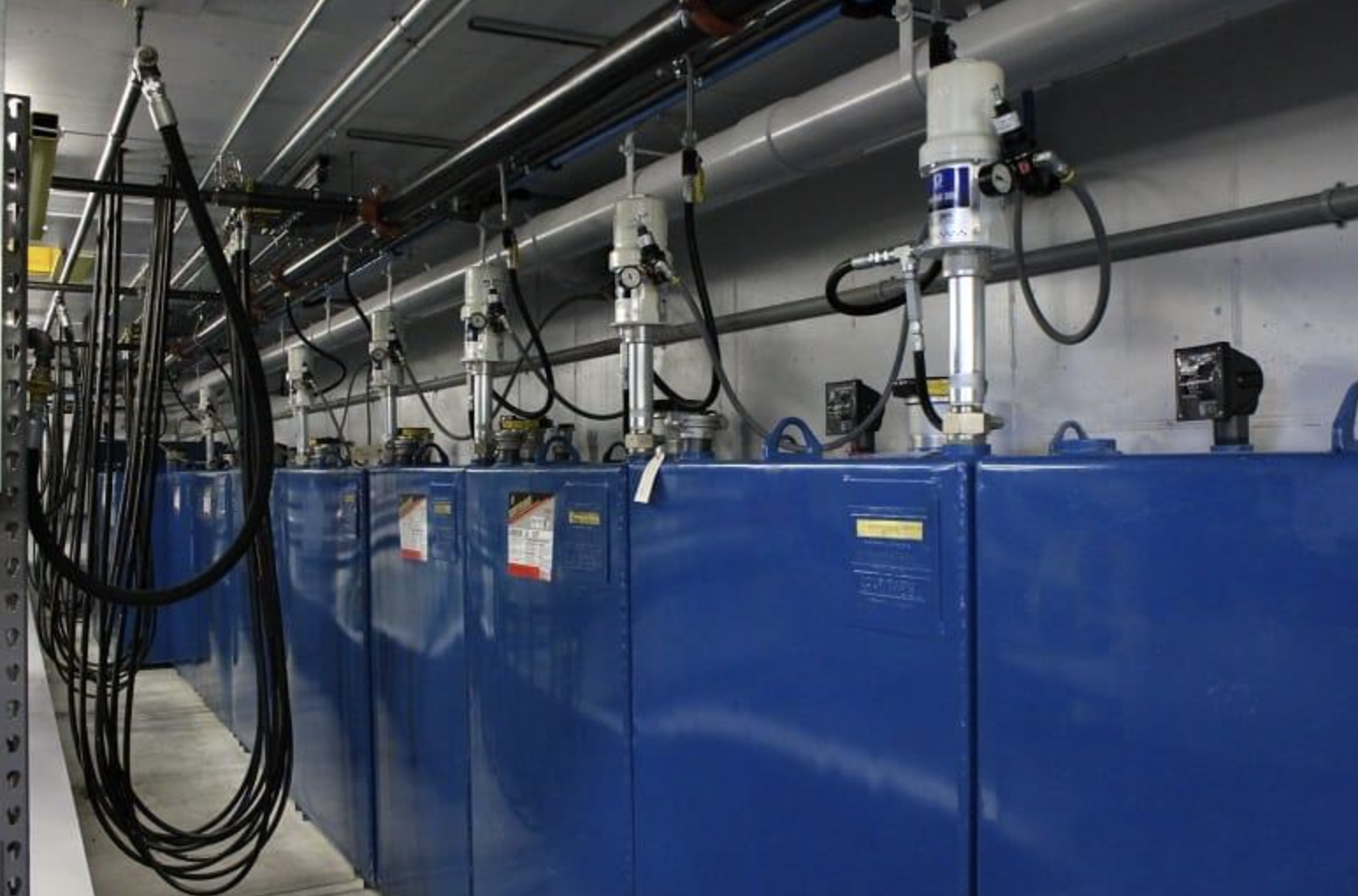
Efficient automotive service facilities rely on more than vehicle lifts and diagnostic equipment. Lubrication and fluid distribution systems play an important role in keeping service bays organized, productive, and equipped for daily maintenance operations.
For dealerships, commercial fleet facilities, and high-volume repair shops, centralized lubrication systems can simplify fluid handling and reduce the time technicians spend transporting and dispensing oils and other service fluids.
Understanding the components of these systems, common maintenance problems, and important installation considerations can help facility managers improve shop efficiency and reduce equipment downtime.
What Is an Automotive Shop Lubrication System?
An automotive shop lubrication system is designed to store, transfer, distribute, and dispense lubricants or other compatible automotive fluids throughout a service facility.
Depending on the facility's needs, these systems may support engine oil, transmission fluids, gear lubricants, and other automotive service fluids.
A typical centralized system may include:
Bulk fluid storage tanks
Fluid transfer pumps
Distribution piping
Hose reels and dispensing stations
Control valves and fittings
Fluid meters and dispensing equipment
Filtration and monitoring components, where applicable
Rather than transporting individual containers between workstations, technicians can access fluids through designated dispensing points.
The appropriate system configuration depends on the facility's layout, fluid types, service volume, and operational requirements.
Benefits of Centralized Lubrication Systems
1. Improved Shop Efficiency
Centralized fluid distribution allows technicians to access lubricants at convenient locations throughout the facility.
This can reduce unnecessary movement between storage areas and service bays, helping technicians spend more time completing vehicle maintenance.
2. Better Fluid Management
Properly designed fluid distribution systems can improve control over how automotive fluids are stored and dispensed.
Metered dispensing equipment can help facilities monitor usage and reduce unnecessary waste.
3. Reduced Manual Handling
Bulk fluid systems can reduce the need to repeatedly transport smaller containers around a busy shop.
Properly positioned hose reels and dispensing stations can also improve workspace organization.
4. Support for High-Volume Operations
Dealerships, fleet maintenance operations, and commercial repair facilities often service multiple vehicles simultaneously.
A centralized lubrication system can support these operations by providing convenient fluid access across several service bays.
Important Considerations for Lubrication System Installation
Installing an automotive shop lubrication system requires careful planning.
Facility Layout
The location of bulk storage, pumps, piping, and dispensing stations should support efficient movement throughout the facility.
Poorly positioned equipment can create unnecessary obstacles or make routine maintenance more difficult.
Fluid Compatibility
Different automotive fluids have different handling and equipment requirements.
Pumps, seals, hoses, piping, and dispensing components must be compatible with the fluids they are intended to handle.
Systems should also be configured to prevent accidental cross-contamination between incompatible products.
Pump and Distribution Requirements
Pump selection depends on factors such as fluid viscosity, delivery distance, flow requirements, and the number of dispensing locations.
Improperly sized equipment can result in inadequate flow or inefficient operation.
Safety and Environmental Requirements
Fluid storage and distribution installations may be subject to applicable building, fire, environmental, and workplace safety requirements.
Appropriate containment, equipment selection, and installation practices should be considered during system planning.
Common Lubrication System Problems
Over time, automotive fluid distribution equipment can develop performance issues that affect daily operations.
Common problems include:
Reduced fluid flow: Restrictions, pump problems, clogged components, or other distribution issues may prevent adequate delivery.
Leaking connections: Worn seals, damaged hoses, or deteriorating fittings can cause fluid loss and create maintenance concerns.
Pump malfunctions: Pumps may experience mechanical wear, pressure problems, or failures related to operating conditions.
Dispensing equipment issues: Hose reels, meters, valves, and nozzles can develop problems that affect accuracy or usability.
Fluid contamination: Improper storage, damaged components, or inadequate system maintenance can compromise fluid quality.
Identifying and correcting these problems early can help avoid larger disruptions to shop operations.
Preventative Maintenance for Automotive Lubrication Systems
Regular maintenance helps preserve system reliability and reduce the risk of unexpected failures.
Depending on the equipment and manufacturer recommendations, maintenance may include:
Inspecting pumps, hoses, and fittings for leaks
Checking fluid pressure and flow
Inspecting hose reels and dispensing equipment
Verifying the operation of meters and control valves
Checking filters and other serviceable components
Monitoring storage and distribution equipment for contamination
Replacing worn seals, fittings, and other components as needed
Maintenance procedures should follow the equipment manufacturer's requirements and applicable safety practices.
When Should a Lubrication System Be Upgraded?
As automotive service facilities expand, their original lubrication systems may no longer meet operational needs.
An upgrade may be appropriate when:
Additional service bays are being added
Existing equipment experiences frequent failures
Fluid distribution is inefficient
Dispensing equipment is outdated or unreliable
The facility needs improved fluid monitoring
The existing layout no longer supports efficient operations
In some cases, replacing individual components may be sufficient. In others, a more comprehensive system modification may provide better long-term value.
Automotive Lubrication System Services in Southern California
Red Rock Industrial provides automotive equipment installation, maintenance, and repair services for dealerships, independent repair facilities, commercial fleets, and other maintenance operations throughout Southern California.
RRI's experience includes lubrication systems, vehicle lifts, air compressors, and associated commercial shop equipment.
Whether you're planning a facility upgrade, addressing equipment problems, or maintaining an existing lubrication system, professional installation and service can help support reliable day-to-day operations.
Need assistance with automotive shop equipment?
Contact Red Rock Industrial to discuss your lubrication system installation, maintenance, or repair needs.